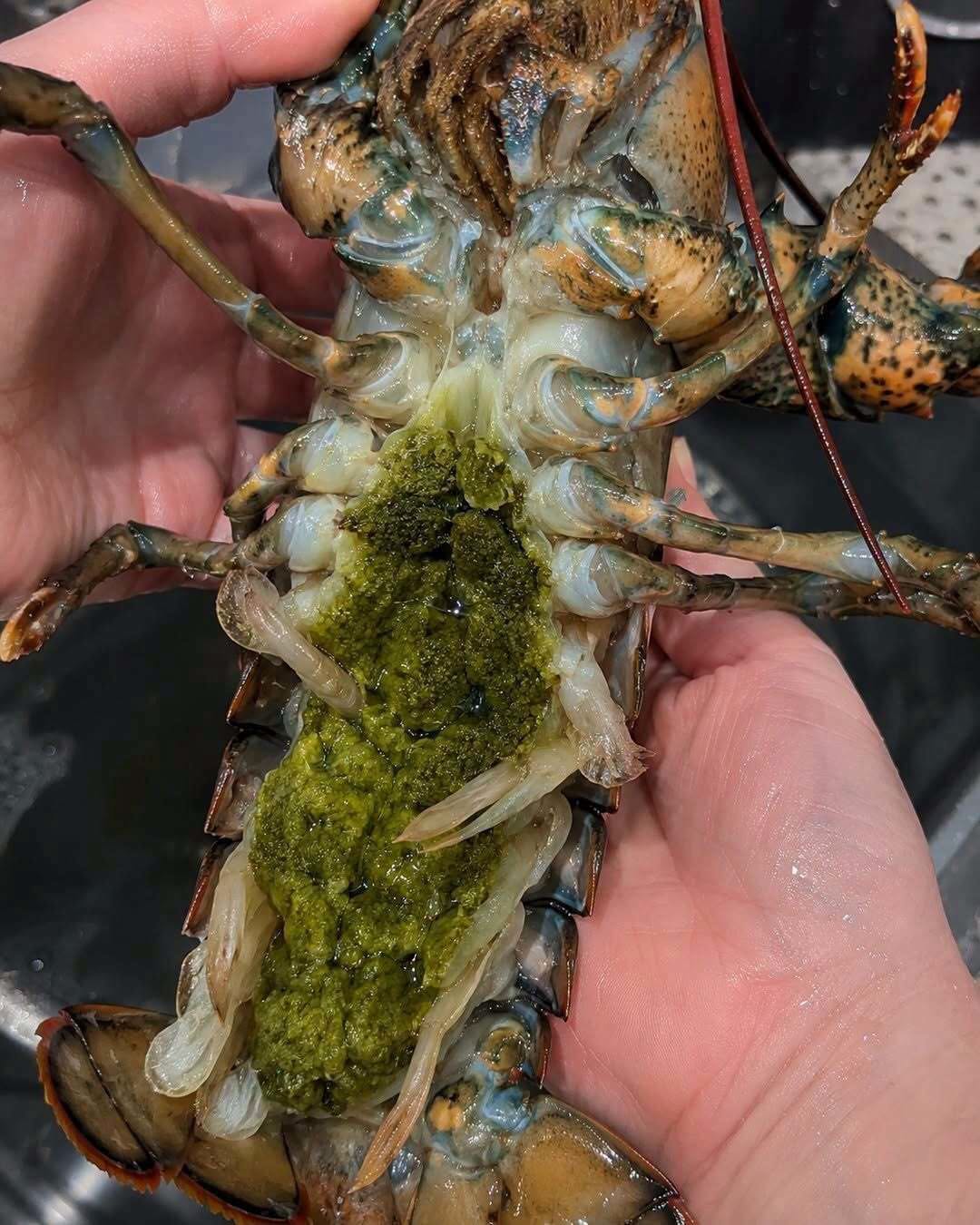
The Mystery of Lobster’s Green Goodies: What Is That Strange Substance Inside?
You’ve prepared the table, melted the butter, and opened a freshly cooked lobster, expecting to find nothing but delicious, pearly-white meat. But then you notice something unexpected: a bright green, paste-like substance tucked inside the lobster’s body.
Before panicking and throwing your expensive seafood dinner away, there’s something you should know. What you’re seeing isn’t necessarily a sign of spoilage or a cooking mistake. It’s a completely natural part of the lobster’s anatomy known as tomalley.
For generations, this unusual green substance has sparked debate among seafood lovers. While some consider it an extraordinary delicacy, others prefer to avoid it altogether. Understanding what tomalley is and what role it plays can help you make a more informed decision the next time you enjoy lobster.
Understanding the Green Substance Inside a Lobster
In biological terms, tomalley is the lobster’s digestive gland, an organ that performs functions similar to those of the liver and pancreas in humans.
As the lobster moves along the ocean floor, this gland helps digest food, process nutrients, and eliminate certain waste products. It also plays an important role in storing nutrients.
When the lobster is raw, tomalley generally appears as a dark grey-green substance with a soft, liquid consistency. However, after boiling or steaming, its proteins change, giving it the familiar bright green color and creamy, paste-like texture.
Although its appearance might surprise first-time lobster eaters, tomalley is a natural component of the animal.
Why Seafood Lovers Consider Tomalley a Delicacy
In some upscale seafood restaurants, tomalley is treated as a prized ingredient. Experienced seafood enthusiasts have appreciated its distinctive flavor for generations.
Its texture is rich and creamy, while its taste is intensely savory, buttery, and reminiscent of the ocean. Because of its concentrated flavor, chefs sometimes incorporate it into different dishes to create a deeper seafood taste.
Some popular culinary uses include:
- Mixing it into flavored butter to accompany lobster meat.
- Adding it to seafood soups and bisques for extra richness.
- Spreading small amounts onto warm, crusty bread.
- Incorporating it into sauces to create a more concentrated seafood flavor.
However, tomalley is not universally appreciated. Its unusually strong taste and creamy consistency can be overwhelming for some people. Even among professional chefs, opinions differ, and some prefer to remove it before serving lobster.
The Health Concern: Why Experts Recommend Caution
Although tomalley may appeal to seafood enthusiasts, there is an important health consideration worth understanding.
Because the digestive gland processes nutrients and certain substances from the lobster’s environment, environmental contaminants and naturally occurring marine toxins can accumulate in it.
One particular concern is exposure to harmful algal blooms, sometimes associated with what is commonly called a red tide. Certain algae produce marine toxins that can accumulate in shellfish and other marine animals.
The concentration of these toxins in tomalley can become a health concern, which is why food safety authorities have issued warnings about consuming it in affected regions.
Environmental pollutants and heavy metals are additional concerns that may influence the safety of the digestive gland.
Importantly, the white meat and tomalley do not necessarily accumulate contaminants in the same way. However, it would be misleading to assume that the white meat is automatically safe whenever a lobster has been exposed to harmful marine toxins. Official harvesting closures and seafood safety advisories should always be followed.
For this reason, food safety experts recommend avoiding tomalley when regional advisories are in effect. Depending on the location and circumstances, avoiding it altogether may be the more cautious choice.
How Should You Handle the Green Stuff at Dinner?
If you’re curious about trying tomalley, the most important consideration is where your lobster comes from.
Choose seafood obtained through reputable suppliers who follow local harvesting regulations and safety requirements. Pay attention to official seafood advisories, particularly those involving harmful algal blooms or marine toxins.
Remember that cooking does not reliably destroy all marine biotoxins, so boiling or steaming a lobster should never be considered a way to make contaminated tomalley safe.
Ultimately, whether you choose to eat the green substance is a personal decision. If its appearance, texture, or potential contamination concerns make you uncomfortable, simply remove it with a small spoon and enjoy the white meat from the tail and claws.
A delicious seafood dinner should be an enjoyable experience, not a source of unnecessary worry.
Now that you know what those mysterious green goodies really are, you can approach your next lobster dinner with a little more knowledge and confidence. Bon appétit!
Leave a Reply