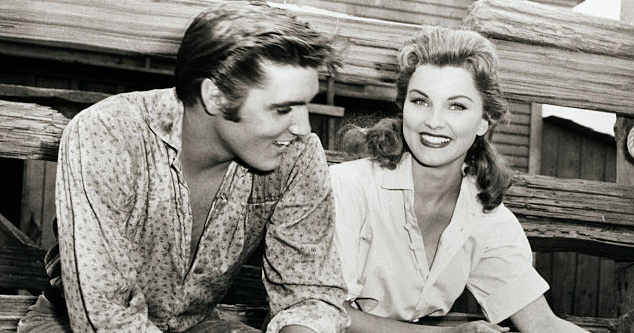
Elvis Presley’s First Film: The Hidden Historical Mistakes, Unrequited Love, and Untold Stories Behind Love Me Tender
Watching Love Me Tender on YouTube today feels like stepping into a fascinating piece of Hollywood history. Released in 1956, the film remains an enjoyable experience and a reminder of the extraordinary charisma that made Elvis Presley a worldwide sensation. Long before the famous Las Vegas jumpsuits, his later personal struggles, and the tabloid attention that surrounded the final years of his life, Elvis possessed a remarkable combination of talent, charm, and natural appeal.
He was more than just the King of Rock ’n’ Roll; he was a cultural phenomenon. With his warm, distinctive voice, natural sense of rhythm, and youthful sincerity, the 21-year-old Mississippi-born singer demonstrated in his very first movie that his appeal extended far beyond the music industry.
Set during the turbulent years of the American Civil War, Love Me Tender combines romance, family conflict, betrayal, and classic Western storytelling. When the movie premiered at New York City’s famous Paramount Theater in November 1956, excitement surrounding the event reached extraordinary levels.
More than 1,500 enthusiastic fans reportedly gathered overnight beneath an enormous, 40-foot cardboard cutout of Elvis, hoping to secure a place inside the theater.
Once the screening began, the excitement became almost uncontrollable. The continuous screams of teenage fans were reportedly so loud that audiences struggled to hear Elvis delivering his lines. It was a remarkable demonstration of the unprecedented level of celebrity he had achieved in such a short time.
On screen, Elvis looked remarkably young, with a gentle, boyish appearance that contrasted with the rebellious image he was developing as a rock star. His naturally light-brown hair and unmistakable Southern accent added to his charm, giving him an innocent and approachable quality.
But behind the enthusiastic crowds and the film’s beautiful black-and-white cinematography lies a much deeper story. From fascinating behind-the-scenes details and personal heartbreak to historical inaccuracies and forgotten moments in Hollywood history, Love Me Tender contains far more than meets the eye.
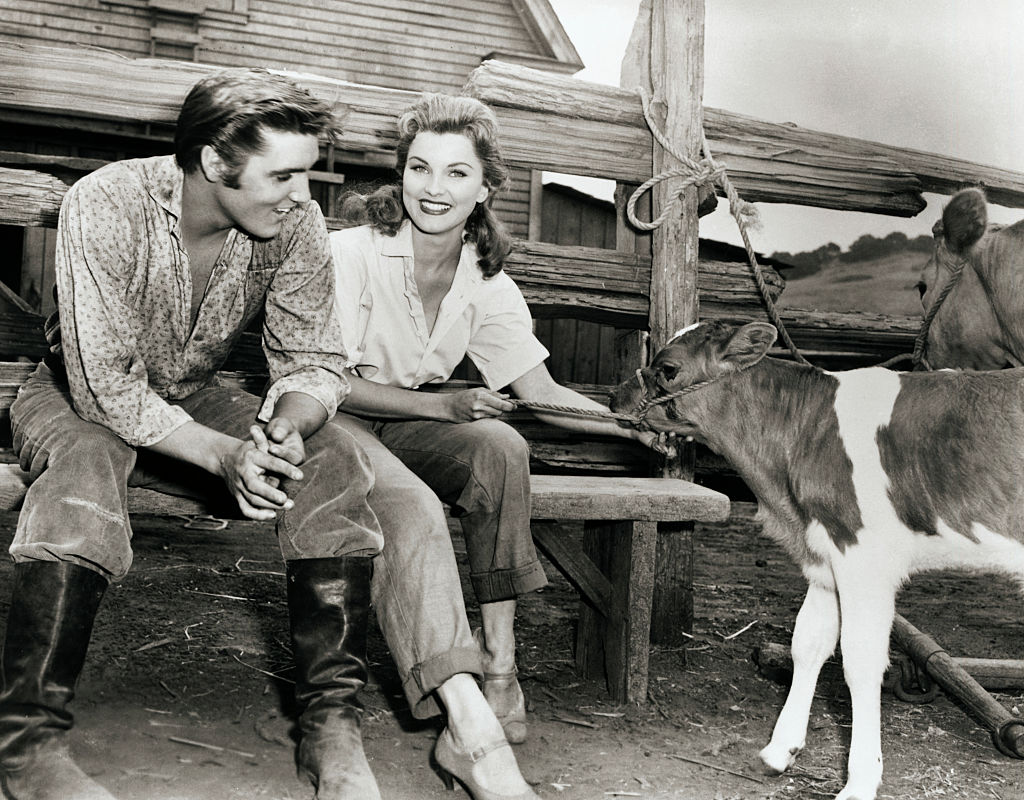
From Outlaw Brothers to a New Title: How Elvis Presley’s First Film Came to Life
One of the most surprising details about Love Me Tender is that the movie was never originally intended to carry the title that would eventually make it famous.
During production, the film was known as The Reno Brothers. However, Twentieth Century Fox decided to change its name shortly before release, taking advantage of the enormous popularity of Elvis Presley’s title song, which he had recorded while working on the movie.
The story was loosely inspired by the real-life Reno Gang, a notorious group of brothers who operated in Indiana during the 1860s. The Reno brothers became infamous for their criminal activities and are often associated with some of America’s earliest train robberies. Their reign of crime eventually ended amid mob violence and vigilante justice.
Interestingly, Love Me Tender remains the only film in Elvis Presley’s 31-movie career in which he portrayed a character based on a historical figure.
The Love Me Tender Timeline
- June 1956: Elvis meets his future co-star Debra Paget on The Milton Berle Show.
- September 1956: He performs the ballad Love Me Tender on The Ed Sullivan Show.
- October 1956: The single achieves gold-record status even before its official release and spends five weeks at the top of the Billboard charts.
- November 1956: The film premieres at New York City’s Paramount Theater, attracting enormous crowds of excited fans.
- Late 1950s: Priscilla Beaulieu reportedly adopts a hairstyle inspired by Debra Paget in an effort to attract Elvis’s attention.
Long before his Hollywood career began, a teenage Elvis had worked as a movie theater usher in Memphis. During those years, he spent countless hours watching films and studying the performances of actors he admired, including James Dean, Marlon Brando, and Tony Curtis.
Unlike the image many people later associated with him, Elvis had serious ambitions of becoming a respected dramatic actor. He wanted to demonstrate that his abilities extended well beyond singing and performing on stage.
However, his influential manager, Colonel Tom Parker, had a very different vision for his Hollywood career. Parker viewed the film industry as a powerful promotional opportunity for Elvis’s music. He believed that every movie should include a soundtrack that could generate additional record sales.
Despite these commercial ambitions, Elvis’s first Hollywood opportunity did not initially involve a leading role. After Twentieth Century Fox offered him a contract following a three-day screen test, he was cast as Clint Reno, the youngest of the Reno brothers, who remains at home while his three older brothers fight for the Confederacy.
The role had reportedly been offered to established actors Jeffrey Hunter and Robert Wagner, but both had declined it because they considered the part too small.
For Elvis, however, this supporting role marked the beginning of an entirely new chapter. His first appearance on the big screen would soon introduce him to an audience far larger than the one he had already conquered through music.
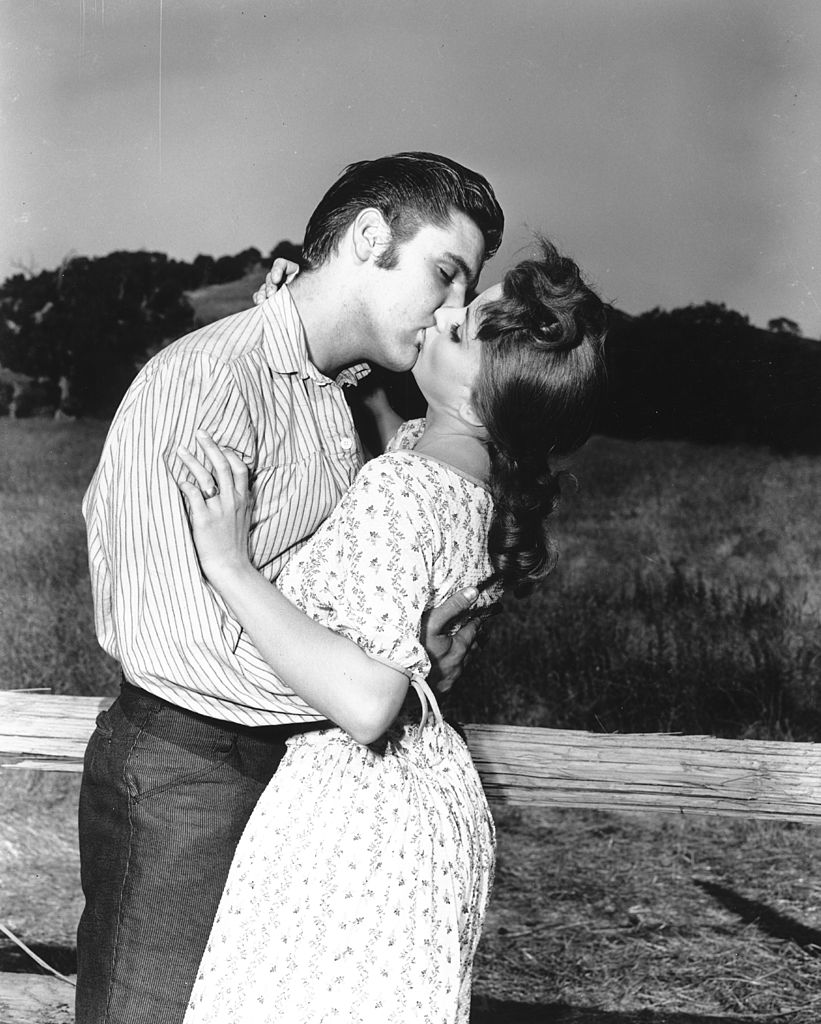
Third-Billed but Fully Committed: Elvis Takes His First Acting Role Seriously
Love Me Tender holds another unusual distinction in Elvis Presley’s film career: it was the only movie in which he did not receive top billing. On the original theatrical posters, his name appeared third, below established stars Richard Egan and the beautiful Debra Paget.
Despite being given a supporting role, Elvis approached his new profession with remarkable dedication. Unfamiliar with the more relaxed routines of Hollywood film sets, he arrived on his first day having memorized not only his own dialogue but the entire screenplay, word for word.
He also threw himself into the physical demands of filming. However, he later joked to a friend that he had never imagined spending an entire day of his Hollywood debut working “behind a team of mules.”
Producer David Weisbart was reportedly impressed by the young singer’s attitude. He described Elvis as humble, courteous, and genuinely serious about developing his acting abilities.
Presley completed his acting scenes and recorded four original songs for the soundtrack in just over a month.
As studio executives began recognizing the extraordinary potential of their new star, they gradually expanded his role during production, adding more dialogue and scenes to give him greater visibility.
Historical Inaccuracies: When the 1950s Invaded the 1860s
Initially, Elvis was excited about the opportunity to play a straightforward dramatic character without having to sing. Unfortunately for him, the studio had other plans.
His hopes of completing a film without musical performances quickly disappeared. Barely five minutes into his first scene, his character, Clint Reno, begins singing while working in a field.
The historical atmosphere becomes even more complicated during a county benefit scene. What should have been a moment rooted in the 1860s suddenly turns into a showcase for Elvis’s contemporary stage persona.
He launches into his famous hip-shaking movements and energetic guitar performance, while female extras dressed in traditional bonnets respond with enthusiastic screams.
The contrast between the Civil War setting and the unmistakable entertainment style of the 1950s creates some of the film’s most memorable historical inconsistencies.
The movie’s famous title song also has an interesting connection to the past. Love Me Tender was not an entirely original composition but rather a new adaptation of Aura Lee, a sentimental American ballad that had become popular during the Civil War era.
The new lyrics were officially credited to Vera Matson, the wife of musical director Ken Darby, who was actually responsible for writing them. Elvis also received a co-writing credit as part of a royalty arrangement.
Years later, during a 1968 press conference, Presley reportedly joked that his actual contribution to the lyrics amounted to just “a single line.”
Regardless of how much he contributed to the songwriting, the track became an extraordinary commercial success.
When Elvis performed Love Me Tender on The Ed Sullivan Show on September 9, 1956, several weeks before the film and single were officially released, the performance created an unprecedented wave of public excitement.
RCA reportedly received more than one million advance orders, allowing the song to achieve gold-record status before the records had even been manufactured.
The ballad subsequently reached number one on the Billboard charts, where it remained for five weeks. It also became one of the most recognizable songs of Elvis’s career.
Even decades after its release, Love Me Tender remained an important part of his musical legacy and continued to feature in his live performances until his death in 1977.
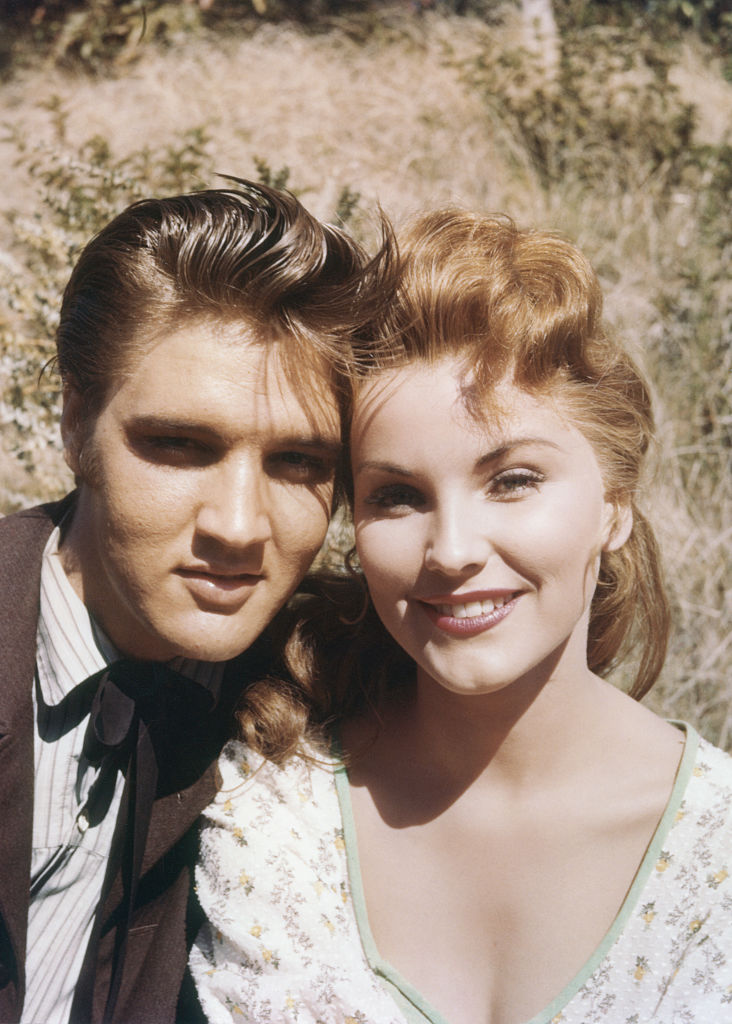
Unrequited Love: Elvis Presley’s Fascination with Debra Paget – The Romance That Never Was
While the musical performances may have disrupted the historical atmosphere of the Civil War, the chemistry between Elvis Presley and his leading lady, both on and off the screen, was reportedly very real.
At just 22 years old, Debra Paget was already an established Hollywood actress, admired for her extraordinary beauty. Even legendary director Cecil B. DeMille was said to have described her as a woman who had been “touched by the hand of God.”
Elvis had actually met Paget several months before filming began, when they crossed paths on the set of The Milton Berle Show in June 1956. It was the same television appearance during which Elvis shocked conservative America with his energetic hip movements during a performance of Hound Dog.
Paget later admitted that she had approached their first meeting with considerable uncertainty.
“Although I usually don’t form an opinion of a person until I have met him, frankly I looked forward to my first meeting with Elvis Presley with mixed emotions,” she recalled. “I’d heard and read a lot about this new young singing sensation from Tennessee—and most of it was not complimentary.”
However, Elvis quickly made a different impression than she had anticipated. When they were introduced, the young singer greeted her politely, shook her hand, warmly acknowledged her mother, and even went out of his way to find a comfortable chair for the older woman.
“From the very beginning, Elvis impressed me as a pleasant, sincere, obliging young man,” Paget reportedly said. “Elvis and I just sort of came together like a couple of children, really.”
For Elvis, however, the attraction reportedly developed into something much deeper. Captivated by Paget’s beauty and personality, he allegedly considered her one of the most beautiful women he had ever met.
He reportedly began visiting her family home regularly, where her parents welcomed him warmly and treated him almost like a member of the family.
Following the filming of Love Me Tender, Elvis is said to have formally proposed marriage to Paget. Unfortunately, the romance never developed into the fairytale he had hoped for.
Paget’s parents reportedly opposed the idea, expressing concerns about her young age and the direction of her acting career. At the same time, Paget was reportedly developing an interest in the famously wealthy and unconventional film producer Howard Hughes.
Ultimately, the relationship did not progress, and Elvis had to accept that his feelings were not being returned in the way he had hoped.
Nevertheless, Paget appears to have left a lasting impression on the singer.
Years later, in 1959, when a young Priscilla Beaulieu was trying to capture Elvis’s romantic attention while he was stationed in Germany, she reportedly took inspiration from Debra Paget’s appearance in Love Me Tender.
Priscilla carefully styled her hair and makeup to resemble Paget’s distinctive look, hoping to recreate the image that had once captured Elvis’s attention.
It was an intriguing detail that connected two important women in Elvis’s romantic history, demonstrating just how memorable his first Hollywood leading lady had become.
Reshoots, Elvis’s Rebellious Hairstyle, and the Hilarious On-Set Mistakes You Never Noticed
However, when test screenings took place, the reaction was overwhelmingly negative. Elvis’s mother, Gladys Presley, reportedly wept alongside thousands of other emotional viewers who were deeply upset by the tragic fate of the young star’s character.
Faced with such a strong reaction, studio executives decided that changes were necessary and quickly arranged additional filming.
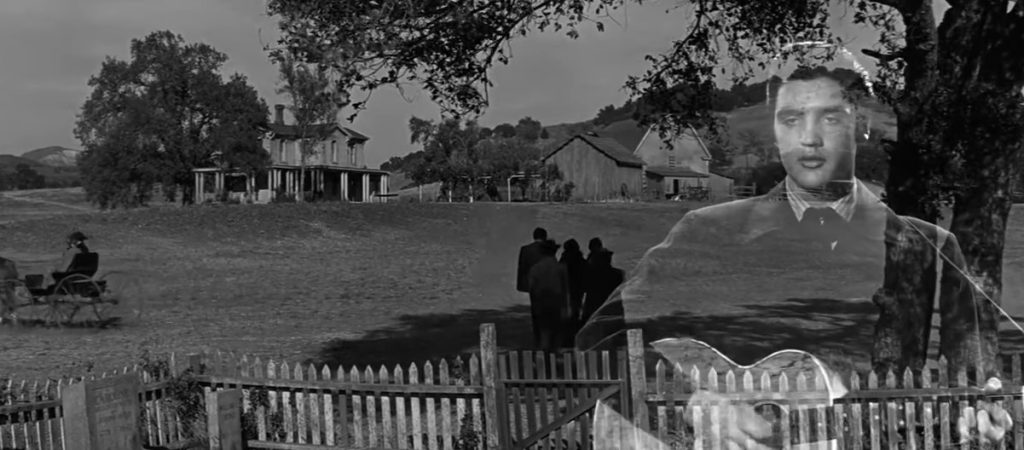
To make the ending more comforting for audiences, the producers added a dreamlike sequence during the closing credits. In this scene, a glowing, almost ghostly image of Elvis appears high above his grieving family, singing the film’s famous title song, Love Me Tender.
Although the addition helped soften the emotional impact of the ending, it also introduced an amusing continuity mistake that observant viewers can still spot today.
By the time the additional footage was filmed, Elvis had already changed his naturally light-brown hair to the deep black shade that would become his signature look. Consequently, his hairstyle and hair color suddenly appear different between the main story and the closing sequence.
But the changing hair color is just one of several amusing mistakes hidden throughout this Civil War-era production.
The Most Noticeable Mistakes in Love Me Tender
1. The Phantom Guitar
During a performance of We’re Gonna Move, Elvis briefly takes both hands completely away from his acoustic guitar to gesture toward the crowd. Despite this, the cheerful guitar accompaniment continues playing in the soundtrack without interruption.
2. The Teleporting Gun
In a scene involving the Reno brothers disarming three former soldiers, a firearm appears to change position between camera shots. At one moment, it is concealed beneath a jacket, while in the next, it is clearly visible on a belt.
3. The Time-Traveling Zippers
One particularly noticeable historical inconsistency involves a Confederate soldier zipping up a pair of trousers taken from a Northern soldier. The problem? Modern zipper technology was not yet available for ordinary mass-produced clothing during the Civil War era.
4. The 1950s Convertible
During an emotional scene in which Cathy Reno sits crying beside a window, viewers with particularly sharp eyes may notice something unexpected in the background. Hidden among the distant trees, a mid-century automobile can be seen parked along the horizon.
A Forgotten Hollywood Moment That Became History
Rather than spoiling the experience, these amusing production mistakes add another layer of nostalgia to Love Me Tender. They offer a glimpse into the filmmaking practices of the 1950s and remind us that even major Hollywood productions were not immune to continuity errors.
More importantly, the film captures a remarkable turning point in Elvis Presley’s life.
It documents the moment when a young, somewhat shy but extraordinarily talented singer from Memphis was beginning his transition from music sensation to Hollywood star.
At the time, neither Elvis nor the filmmakers could have fully anticipated the extraordinary cultural impact he would eventually have.
His first appearance on the big screen was only the beginning of a legendary career, and Love Me Tender remains a fascinating reminder of the early days of the man who would become the King of Rock
Leave a Reply